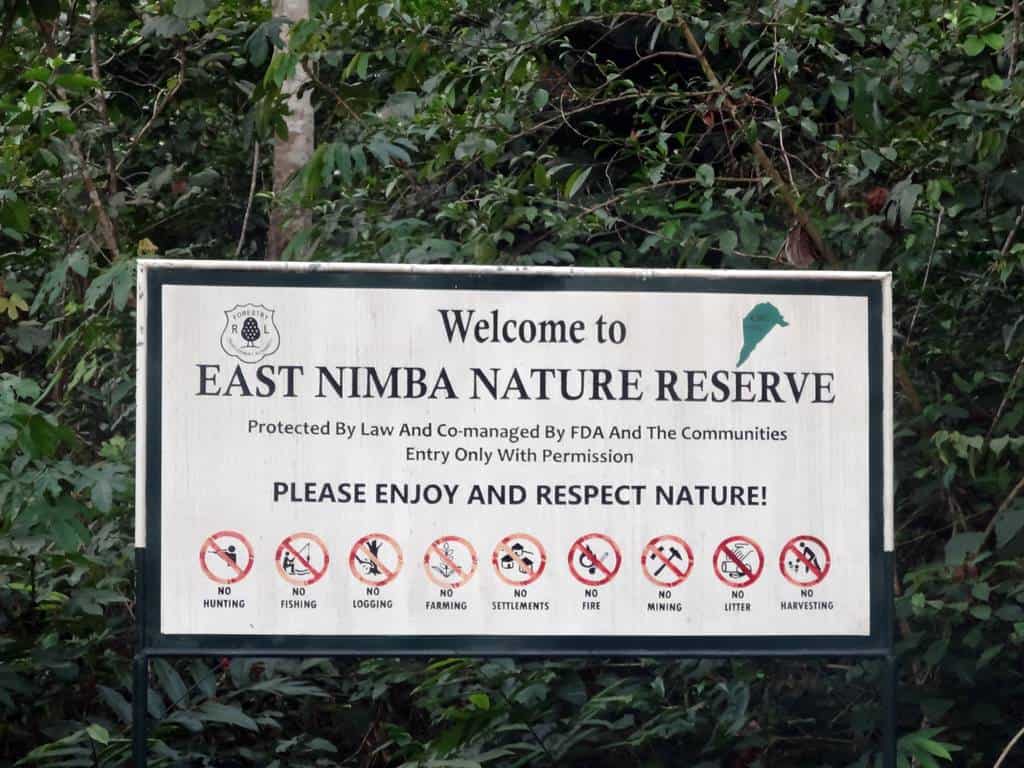
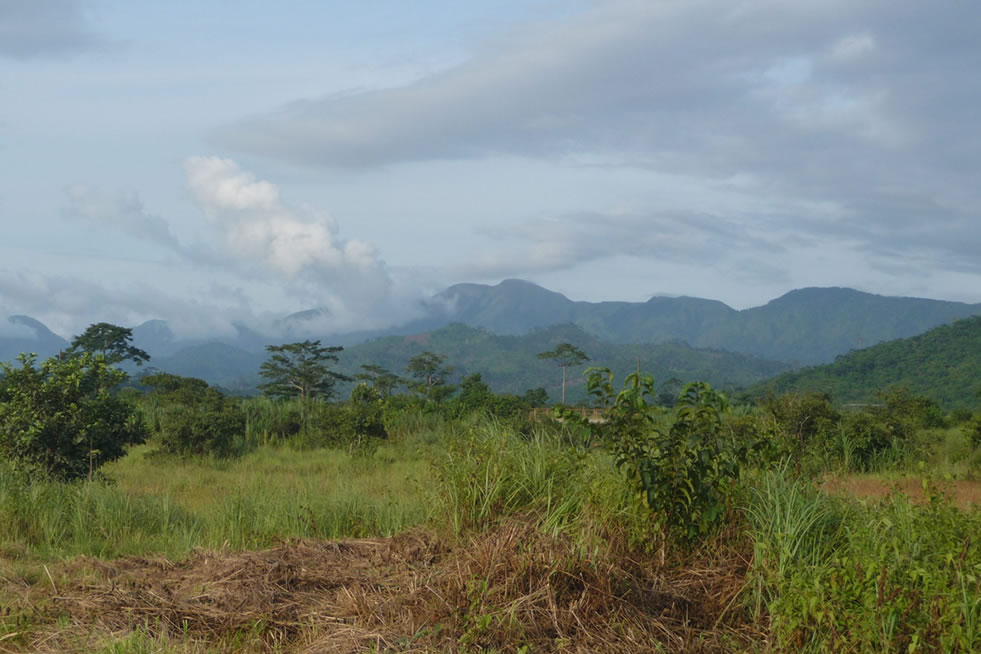
Message from the Chairman of Forestry and Wildlife Management
Chimpanzees in Sapo National Park, Liberia. By Fauna & Flora at: https://www.fauna-flora.org/countries/liberia
Importance of forests and wildlife
Liberians should consider forest and wildlife as inherited natural resources. Other countries have deserts, non-fertile soils, no water and rain hardly fall. We are lucky to be surrounded by forests and wildlife. According to the World Wildlife Federation (WWF), forests provide 40% of planet Earth oxygen. In addition, forests also provide shelter, food, water, medicine, jobs and fuel for over 2 billion people. Including many plants and animal species, forests are also homes for many indigenous people. Forests protect communities from landslides, soil erosion, and floods. Within the global hydrologic (i.e. water) cycle, forests release water vapors into the atmosphere, capture rainfall and help to regulate global climate. Additional summaries of the importance of forests are shown below.
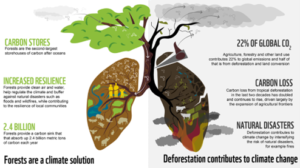
Importance of forests. Modified from: https://wwf.panda.org/discover/our
Deforestation and reforestation
Deforestation destroys habitats for wildlife, contribute to global warming and desert expansion. It is in the interest of mankind, specifically Liberians to conserve and protect forests and wildlife. As humans and due to uncertain future forecasted by global climate change models, there is an urgent need for us to find a sustainable balance between the intensity and frequency of deforestation and reforestation. Similarly, we should find a balance between our needs for forest products and conservation of forest, ecosystem and biodiversity. Talking of biodiversity, the 3 components of biodiversity are genetic, species and ecosystem diversity. Here are 4 questions for Liberians to think about: 1) is it possible for logging companies and indigenous people to amicably coexist? 2) Is there such thing as equitable exploitation of forest products in Liberia? 3) How do we balance the frequency and intensity of deforestation with reforestation so that both are sustainable? 4) Since forests and wildlife are inherited natural resources, are we able to apply the principle of intergenerational equity so that unborn generations of Liberians meet similar forests and wildlife?
Critical Issues
- Deforestation by loggings companies and slashed and burned indigenous farmer
- Reforestation with inadequate monitoring without using drones nor humans
- Conservation of wildlife, biodiversity and endangered species
- Protection of indigenous people’s rights, properties and cultural sites
- Equitable exploitation of forest products by major corporations
- Protection of National Parks
- Introduction of fertilizers so as to minimize slashed and burned deforestation by farmers
- Impacts of global climate change on wildlife and forests
- How & why should we educate Liberian fishermen about the size/age/weight of fish to catch and NOT to catch?
Mission statement
The Forestry and Wildlife Management cluster is not intended to replace, remove, or take jobs from other Liberians. Rather, one of its primary goals is to bring together scientists, engineers, investors, tourists, indigenous communities, and other stakeholders to strengthen our understanding of forestry and wildlife. In particular, it seeks to apply the principle of intergenerational equity—working to achieve and sustain a balance between meeting today’s needs for wildlife and forest resources and preserving these resources so future generations of Liberians can meet their own needs.
Budoin-Brutus Cooper, Ph.D.
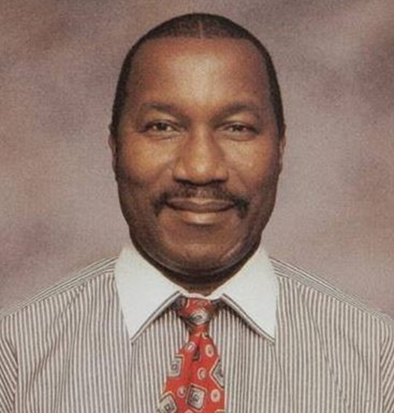
Dr. Budoin-Brutus Cooper
Dr. Budoin-Brutus Cooper, Ph.D., CPG
Dr. Cooper currently serves as a Senior Environmental Scientist and Regional Environmental Manager with the Commonwealth of Virginia. He brings more than 30 years of professional experience as an environmental engineer, environmental scientist, associate professor of environmental science and geology, and project manager.
Throughout his career, Dr. Cooper has supervised environmental impact assessments (EIAs) and environmental impact statements (EISs) for major land-disturbing projects, including highways, railways, airports, and mining operations. He has also developed ecological risk assessments evaluating the impacts of such projects on forests, wildlife, endangered species, & biodiversity. In addition, Dr. Cooper has coordinated public hearings, facilitated public input processes, and overseen studies assessing the social and environmental impacts of major investment projects.
As a board-certified professional geologist, Dr. Cooper worked as a uranium exploration geologist in central Liberia for five years. In this role, he used Geiger counters and scintillometers to investigate uranium mineralization. His responsibilities included conducting geologic mapping, supervising drilling and rock coring operations, performing statistically representative sampling, preparing contoured maps, interpreting geological data, and writing technical reports.
Dr. Cooper was appointed Acting Director of the Bureau of Hydrocarbon at the Liberia Ministry of Mines and Energy, where he led a team of scientists in proposing the Government of Liberia’s petroleum exploration project. Under this initiative, Liberia’s offshore region was divided into exploration blocks for the first time and offered to oil companies through an auction process.
Dr. Cooper was subsequently sent to Amoco’s facilities in London and the North Sea, where he received training as a petroleum geologist. After returning to Liberia, he worked as a petroleum geologist, conducting electric log interpretations, petroleum well logging, well-site testing for petroleum, seismic data interpretation, and geological mapping for reservoir identification, as well as preparing technical reports.
Environmental Engineer at Environsite Assessment, LLC., Dr. Cooper supervised subsurface investigations involving rock formations evaluation and the remediation of contaminated soil and groundwater. He hired and oversaw contractors performing soil borings, rock drilling, groundwater monitoring well installation, statistically representative sampling, and chemical analyses. He also directed mine drainage and water quality investigations, environmental pollution assessments, and remediation activities. In addition, he managed projects, prepared technical reports, and developed innovative strategies that balanced sustainable development with the conservation of natural resources.
Dr. Cooper earned a B.Sc. in Geology from the Engineering Department at University of Liberia and an M.Sc. in Exploration Geology from Wright State University in Dayton, Ohio. He later researched, wrote, and successfully defended his Ph.D. dissertation in Environmental Science at George Mason University in Fairfax, Virginia, USA. Dr. Budoin-Brutus Cooper obtained a board-certified Professional Geologist (CPG) license from the Commonwealth of Virginia. He is ranked as an associate professor of environmental science and geology.