

The Chairman of COLED’s Governance Committee provides strategic leadership in advancing governance reform initiatives aimed at strengthening institutions and improving public service delivery in Liberia. Through the Governance Committee Portal, he fosters a platform for dialogue, collaboration, and actionable strategies that bring together government leaders, private sector stakeholders, civil society, and the diaspora in a shared commitment to national development.
The Chairman’s work is grounded in the recognition that Liberia stands at a pivotal moment in its history, where governance reform is essential to unlocking sustainable development and improving the quality of life for its citizens. Drawing on decades of national experience and global best practices, he advocates for governance systems that are transparent, accountable, inclusive, and responsive to the needs of the Liberian people. His leadership emphasizes the transformation of long-standing structural challenges—such as weak institutional capacity, limited service delivery, and gaps in accountability—into opportunities for meaningful and lasting reform.
Under his guidance, the Governance Committee advances a comprehensive and forward-looking framework designed to address persistent governance issues while positioning Liberia for inclusive economic growth, institutional credibility, and increased regional and global competitiveness. He underscores that strong governance is the foundation for investment, innovation, and social progress, and champions reforms that strengthen the rule of law, improve public sector performance, and ensure equitable access to essential services.
The Chairman is a strong advocate for practical, results-driven governance. His approach moves beyond theory to measurable outcomes that directly impact citizens’ lives. Key reform priorities include strengthening contract enforcement, modernizing fiscal systems, addressing patronage practices, and improving public sector efficiency. He is equally committed to advancing digital transformation and decentralization as critical tools for reshaping governance across Liberia. By promoting the automation of government services and expanding access to rural and underserved communities, he seeks to reduce inefficiencies, minimize corruption, and bring government closer to the people.
A central pillar of his leadership is the promotion of decentralization supported by fiscal empowerment and administrative autonomy. He envisions a Liberia where development is equitably distributed across all counties, rather than concentrated in urban centers such as Monrovia. This approach ensures that governance systems are locally responsive and capable of addressing community-specific needs.
The Chairman’s philosophy is rooted in the belief that governance must serve every citizen—regardless of geography, socioeconomic status, or background. His work reflects a commitment to shared responsibility, collective action, and sustained leadership. Through the Governance Committee, he encourages continuous engagement, collaboration, and innovation to build a governance system that reflects the aspirations and full potential of the Liberian people.
Guided by core values of integrity, transparency, accountability, equity, innovation, and service excellence, the Chairman promotes ethical leadership, open governance, and citizen-centered service delivery. He emphasizes the importance of data-informed decision-making, digital-first strategies, and inclusive participation to strengthen institutional performance and rebuild public trust.
Through COLED’s Governance Committee, he leads a strategic, policy-focused approach to reform that integrates research, advisory support, and stakeholder collaboration. His efforts are aimed at strengthening institutional capacity, improving coordination across government systems, and ensuring that governance reforms translate into measurable outcomes that enhance public service delivery and national development.
Under his leadership, the Governance Committee continues to advance key strategic priorities, including strengthening accountability systems, supporting effective decentralization, promoting professional public service, improving citizen-centered service delivery, advancing digital governance, reinforcing the rule of law, and fostering inclusive participation.
Through this work, the Chairman remains committed to supporting the Republic of Liberia in building a modern, resilient, and inclusive governance system—one that delivers results, inspires public confidence, and drives sustainable national progress.
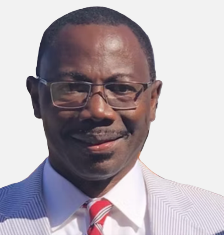
Dr. Alovett Joel King, BA, MBA, DM, Ph.D.
Interim Chairman
Dr. Alovett Joel King, BA, MBA, DM, Ph.D.
Dr. King is a distinguished executive leader with extensive experience in data governance, public policy, global business, education, and organizational leadership. His career reflects a unique blend of expertise across industry, academia, and international development, enabling him to drive transformational change in both the United States and Africa.
He holds a Doctor of Management from the University System of Maryland and a PhD in Organizational Leadership from Columbia International University. He also earned a Master of Business Administration (MBA) in Management Information Systems from St. Peter’s University. In addition, Dr. King has pursued advanced executive and professional studies in public policy, international business, entrepreneurship, and coaching, including a Diploma in Public Policy from the University of Oxford, executive coaching training from the University of Cambridge, and certifications from the University of London, Stanford University, and the University of Pennsylvania’s Wharton School. His early academic foundation includes studies in Economics and Geography at the University of Liberia and training at the Lands and Mines Survey Engineering School in Liberia.
Dr. King has built a distinguished professional career across multiple sectors, including banking, financial services, healthcare, and pharmaceuticals. He has held key roles with leading organizations such as FirstUSA Bank, Banc One Corporation, Prudential Financial, Johnson & Johnson, Merck & Co., AmeriHealth Caritas, and Freedom Mortgage Corporation. Through these roles, he has developed deep expertise in data governance, financial systems, business strategy, and organizational transformation.
In addition to his corporate leadership, Dr. King has made significant contributions to academia. He currently serves as a faculty member at Rowan University’s Rohrer College of Business and previously taught at Bucks County Community College. He also contributes to scholarly research as a paper reviewer for the Academy of Management, reflecting his ongoing engagement in advancing knowledge in leadership and organizational studies.
Dr. King currently holds several prominent leadership positions, including Deputy Chief of Data Governance for the School District of Philadelphia, where he supports data systems and governance across more than 250 schools. He also serves as President of Prime Credit Reference Bureau Liberia Inc. and President of DATATICO LLC, where he leads initiatives focused on data-driven innovation and financial infrastructure development.
His leadership philosophy is grounded in a commitment to leveraging data, education, and innovation to create equitable opportunities and sustainable systems that improve lives globally. He believes that effective leadership is rooted in service, integrity, and the empowerment of others. His approach is guided by three core principles: purpose-driven leadership, which aligns strategy with meaningful impact; data-informed decision-making, which emphasizes the use of accurate and reliable data to drive outcomes; and continuous learning and collaboration, which fosters organizations that evolve, adapt, and thrive in a dynamic global environment.
Dr. King is widely recognized for his strategic vision, multidisciplinary expertise, and unwavering commitment to advancing organizational excellence and global development.